

UpRouted: Why I Am Building a Media Platform for Migrant Australia
Migrant stories. Australian truths.

One day, on a bus to the Gabba, a man explained India to me.
He had never been.
The bus
It was game day- Australia vs. India Cricket match in Brisbane - and the man sitting beside me on the bus to Gabba stadium was friendly, chatty, the way strangers sometimes are when they’re heading to the same place and they know it.
Then he started talking about India.
Dirty, Unhygienic. Rule-breakers. His friend had been sick in Bali once - Bali, not India, a different country entirely - and somehow this had become evidence about 1.4 billion people and the subcontinent I came from. He talked about Indians buying up homes in Australia. He talked about why Indians leave - because it’s so poor, so desperate, obviously. He was combining several countries, several decades, several prejudices into one confident summary, delivered to the woman sitting beside him who had spent six years building independent media in the country he was describing.
He did not know that, of course. Why would he? I was just another Indian on a bus..
I could have said nothing and smiled and nodded. I have learned, as most migrants learn, the particular calculus of that moment - the energy it costs, the risk of it, the question of whether this stranger is worth it. In India, I built a platform so stories like mine could be told properly, at scale, without requiring a single individual to exhaust themselves in a private conversation. Here, I was back to the private conversation.
That day I didn’t stay silent.
I told him that Bali, Indonesia and India were different countries. I told him about the dual realities of India - the poverty that is real and the middle class that is also real and the enormous complexity that exists between those two things, flattened every time someone makes a casual assumption. I told him that I, an Indian who had come to Australia, was struggling to find a rental - that the story of Indians buying up homes had not been my experience of arriving here and trying to build something from nothing, again.
We talked for forty minutes.
At the end of it, as the bus pulled up near the ground, he said he was sorry for assuming things about India.
I don’t tell this story because it ended well.
I tell it because I’ve already done this work once.
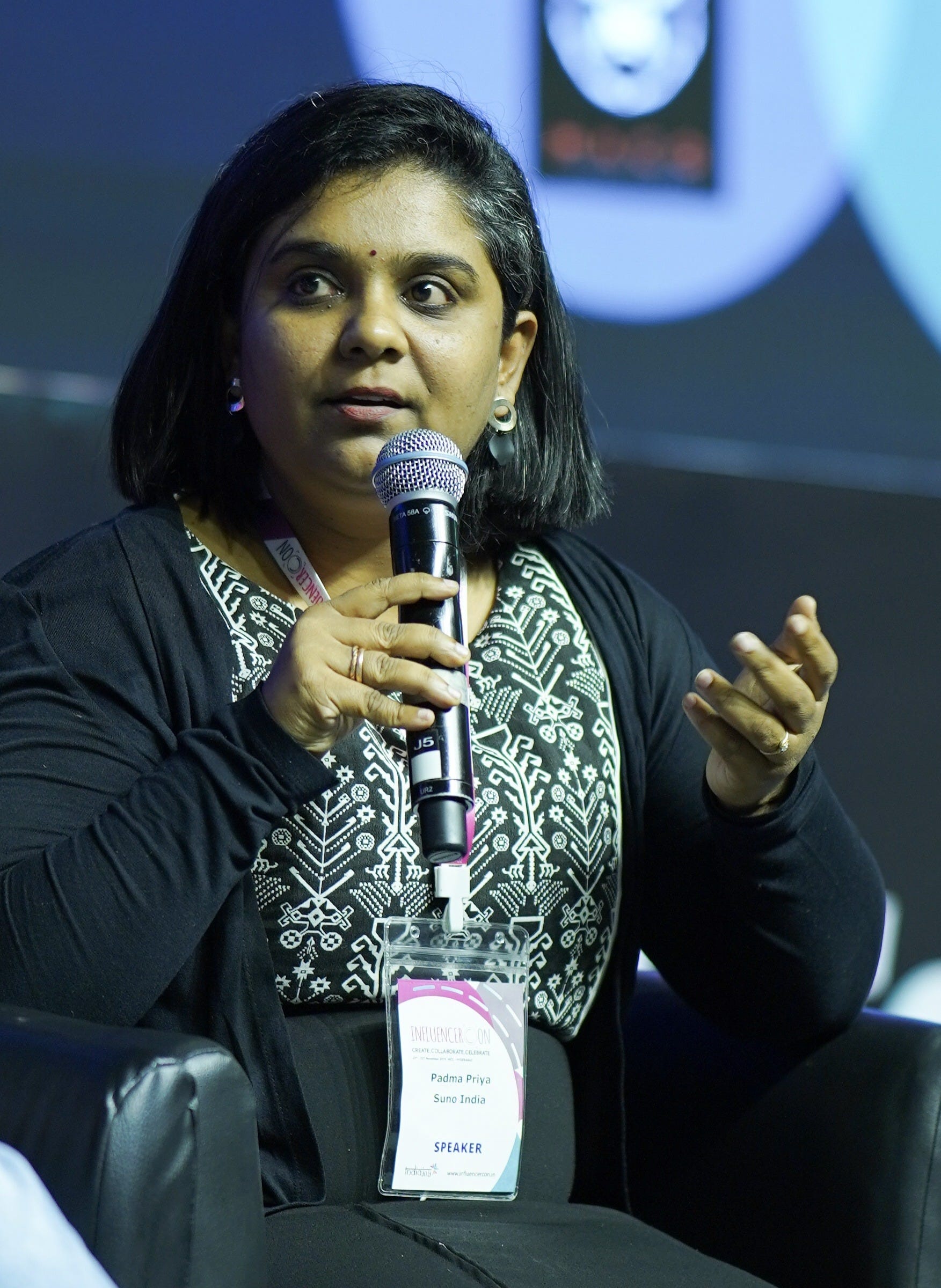
In 2018, I co-founded Suno India, an independent, multilingual podcast platform dedicated to underreported stories, the ones mainstream Indian media either misses or decides aren’t worth the trouble. Over six years, we built a listenership of half a million people. We trained more than 500 independent journalists in audio storytelling. We received support from the Google News Initiative. We proved, on a modest budget, that rigorous public interest journalism could find an audience, if you trusted people enough to give them the full picture without telling them what to think.
I built that platform so stories like mine could be told properly, at scale, without requiring a single individual to exhaust themselves in a private conversation.
Here, I was back to the private conversation.
The conversation on that bus, the correcting, the contextualising, the patient dismantling of assumptions one at a time, is work that migrants do constantly, invisibly, unpaid, while simultaneously trying to build a life. It is exhausting. It should not be the only option.
UpRouted is the other option.
What UpRouted is
UpRouted is independent public interest journalism on and for migrant Australia, irrespective of which country they come from.
We will cover the immigration debate, the real one, not the inflamed one, with facts, sources, and the kind of patience that comes from having done this before. We will explain the systems you need to navigate: visas, work rights, schools, healthcare, housing. We will fact-check the claims that circulate about us. And we will tell the stories that don’t make it into the mainstream, the ones that require someone who already knows where to look, and who already knows what it feels like to be looked past.
We will report. We will advocate. We will be fair to perspectives we disagree with, because our value to you depends on being trusted across communities, not aligned with one side.
Why Uprouted and Why Now
UpRouted is not a real word. It is not a typo. It is a word coined out of desire to express the common immigrant experience. My partner-in-crime Rakesh Kamal coined it. I found that the word turned out to be more accurate than anything I’d found in the dictionary.
Uprooted is what happened to us. UpRouted is what we do next.
It’s the active version. You were uprooted: by choice or by circumstance, willingly or not, with excitement or with grief or with some complicated mixture of all of it and then you got up and found the route anyway.
That gap between uprooted and uprouted : that’s where this publication lives.
And this is not happening in a vacuum. I am building this in a country where racism against migrants, particularly non-white migrants is not a fringe problem. It is a current one.
Anti-immigration rallies across Australian cities in August and October 2025 exposed deep public divides over migration, social cohesion and national identity. Police estimated more than 50,000 people attended protests and counter-protests across the country in August alone. At several of these rallies, men in the uniform of the neo-Nazi National Socialist Network stood alongside attendees waving Australian flags and the NSN played a key role in organising, promoting and executing multiple events. By January 2026, those rallies had continued, with speakers including sitting One Nation senators addressing crowds in multiple cities.
A Scanlon Foundation survey in 2025 found that 52% of Australians viewed immigration levels as too high, while social cohesion data showed concerning levels of prejudice, particularly towards people of Islamic faith and Australians from Asian and African backgrounds.
The coverage of all of this has been extensive. What has been less consistent is the context: who is actually organising these movements, what the data says about immigration and housing and wages, and what migrants themselves think about the country they chose or were forced to make their home.
That gap between the noise and the evidence is where misinformation grows. It is also, not coincidentally, where Uprouted sits.
The man on the bus didn’t arrive at his views in isolation. He had been reading something, watching something, hearing something. The question Uprouted asks is: what would he have believed if the coverage had been more complete?
What’s coming
Every fortnight, Uprouted will publish at least one piece of original journalism — a service explainer, a fact-check, a community story, or an investigation built from a reader tip.
We will tell you how we reported every story. We will publish corrections when we get things wrong. We will disclose our funding clearly and completely. We hold to the Australian Press Council standards from day one.
We are transparent about who we are and what we are trying to do, because trust is not something you declare. It is something you demonstrate, slowly, over time, with receipts. I spent forty minutes on a bus correcting one man’s assumptions about where I come from.
Uprouted is the forty minutes, at scale, in public, with receipts, every fortnight, for as long as it takes.
Subscribe. Send us your stories. Tell someone who needs this that it exists.